Why I Stopped Building My Life Around a 40-Hour Workweek
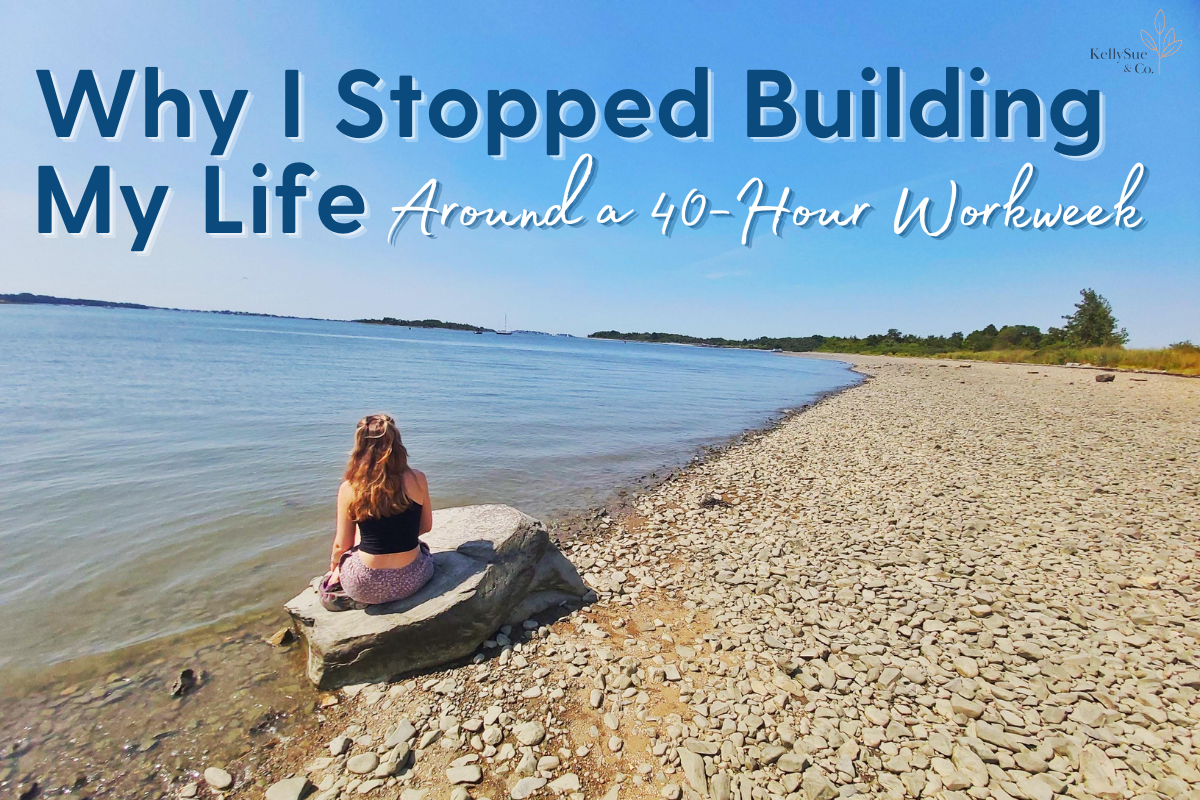
I couldn’t do it anymore and I actually couldn’t do it period.
The 40-hour workweek.
For a long time, I just kept adapting to the pace of the workspace I was in - be it the convent, teaching, the food industry or wherever I found myself. I was really good at adapting and seeming really normal for a time. Until I would hit a wall and then I would go into collapse-mode. This could happen within a few months or a few years.
I wasn’t struggling because I wasn’t capable. I actually always excelled at my positions.
I was struggling because I was trying to force my nervous system into a rhythm that didn’t actually match how I function.
I’ve burned out four times from traditional 9–5 jobs. Each time I left without something else lined up, that’s how bad it was. I would take a break and then try again, do really well for awhile, then crash and urgently need to leave.
I eventually realized that I simply was not built for the normal 9-5 40-hour work week. I could not sustain it.
This is the story of how I stopped building my life around a 40-hour workweek and started building it around my actual capacity instead.
My Burnout Pattern Wasn’t Random
When I look back, burnout wasn’t a one-time event for me. It was a pattern.
I experienced multiple cycles of burnout across different jobs in different industries, including ministry work, teaching, food service, and nonprofit work.
On the surface, these roles were meaningful. I cared about the people I worked with and the work I was doing. That was part of the complexity. As a highly sensitive person, I never took jobs casually. They always had to mean something to me, so I was invested in some aspect of the mission of these places. It made the fact that I could not sustain the work environment even more complicated for me because landing there “felt right” at first.
I would always stay longer than my highly sensitive nervous system could comfortably sustain. I would overextend, overfunction, and override the signals my body was giving me until I hit the wall and would collapse past the point of no return and urgently need to resign.
Being a Highly Sensitive Person in a 40-Hour Work Culture
One of the biggest turning points for me was understanding that I am a highly sensitive person.
In a traditional workplace, the expectation is usually that your nervous system adapts to the pace and rhythms of the office. You get used to the noise, the people, the schedule, the pacing and the constant stimulation.
But for me, that adaptation always had a limit.
At first, it felt manageable. I could perform well. I could push through. I could even convince myself I was okay and could sustain this for awhile.
But over time, my system would start to show signs that it was overloaded. For me that feels like numbness, very low tolerance for everything, no bandwidth in any area of life and starting to dread going to work.
Eventually, the tolerance runs out and I completely collapse.
It took me four rounds of burnout between the ages of 29 and 37 to fully understand that this wasn’t something I was going to “fix” by changing jobs.
It was something I needed to design around.
If this resonates, you’ll also probably relate to my youtube video, 8 Things I Could Never Handle in the Traditional 9-5.
What I Actually Needed Instead of a 9–5
When I left my last traditional job in 2019, I didn’t know everything, but I knew enough about my needs to begin curating my work life in ways that supported me vs. depleted me:
I needed a low stimulation environment.
I needed to work from home.
I needed flexibility in my schedule so I could follow my energy instead of forcing myself into fixed hours.
I needed fewer hours at the computer each day.
I needed the ability to say no when I was at capacity.
And I needed work that I actually wanted to be doing.
Just as importantly, I needed space in my life. Not just weekends or PTO, but actual spaciousness inside my days.
And I needed a way to support myself financially while honoring these needs.
That became the beginning of a completely different way of structuring my work life.
Building a Different Kind of Work Life
I didn’t rebuild everything overnight. It happened slowly.
I began working as a virtual assistant, taking on small amounts of client work and gradually learning what kind of work felt sustainable for me. Around the same time, I also started house sitting, which eventually became a major part of my lifestyle because of how supportive it was to my system in so many ways.
I also had taken on a very part-time job (12 hrs/week) during that transition period, which gave me some stability while I was figuring things out.
I honestly didn’t know it at the time, but during this season, I was beginning to create a lifestyle and work situation where my nervous system could be at the helm.
This eventually would become my Operating Principle.
House Sitting Changed My Financial and Nervous System Reality
House sitting became an unexpected but deeply influential part of my life.
From 2019 until very recently, I chose house sitting as my primary living arrangement. While I did not start house sitting for the lifestyle advantages it gave me (I originally said yes to the opportunities just as a simple side gig and helpful income as I was naturally great with animals,) I realized as I got into it and it really took off for me that I could housesit somewhat full-time and, by doing so, avoid having a rent payment. Not having a rent payment meant that I did not have to work full time hours, so this was a huge priority for me.
This one decision created a significant shift in my capacity.
Without the pressure of monthly rent, I was able to reduce my working hours without feeling constantly financially stretched. That created more room for rest, recovery, and spaciousness.
House sitting is not for everyone, but I was very well suited to it and I also had firm boundaries as to which housesits I would say yes to. That’s content for another blog, but generally I sat in beautiful homes, with good pets and could do my other jobs while also getting paid to house/pet sit. I typically would have to move houses every few weeks, but of course I created a pretty tight system for myself when it came to moves and I was able to do all of this pretty comfortably, all while meeting wonderful people and pets along the way. Some of whom are still my clients today!
(If you’re interested in getting into Paid House Sitting, I wrote an e-book on everything you need to know to get started! Find it here: https://www.kellysuefitz.com/ebook-course)
What My Life Looks Like Now
It has been about seven years since I left my last 9-5 job, and my life now is truly a testament to how I crafted it according to my nervous system.
I currently work only about 15 to 20 hours per week as a virtual assistant. I also continue house sitting, but not full time anymore since we have our own place, and I always have some 1:1 readings or business chats sprinkled in there, along with a little income from my ebooks (Paid House Sitting and Autumn Alignment.)
My days are structured and spacious.
Most mornings begin slowly. I prioritize quiet time, then my work out, shower and get dressed for my day.
My VA work usually happens in focused blocks during the day, with breaks built in for everyday life tasks and snacks.
After work, I often will just go sit outback in the sun listening to a podcast, tend my plants, cook dinner or make a youtube video.
It is spacious and I cannot imagine going back to a full time work situation.
My Nervous System Is Non-Negotiable
At this point, my nervous system is at the helm of my work decisions, always.
I need to work completely from home, in low urgency businesses, in low stimulation environments and have the freedom to work when I choose, according to my energy and needs.
If those conditions are not present, I will not take it on as it does not align with my system.
You Don’t Have to Do It the Traditional Way
I am not suggesting that everyone leave their job or abandon traditional work structures.
While I did leave each job without another lined up, I also had the support to do so. Each transition I made happened with some form of support in place, whether financial or relational.
What I am saying is that there are other ways to build a working life, you just have to be open to it looking very different from what we are conditioned to go for.
You can begin slowly.
You can start while still employed.
You can take on one side client or one small project at a time and build out from there.
You don’t have to redesign everything at once and in fact, you probably can’t.
Even this stage must go at the pace of your nervous system.
Only do what you can handle, little by little. Give yourself time to adjust and discern wisely each step.
This pace is the new normal.
A Different Question to Build From
Instead of asking how to fit into a 40-hour workweek, I started asking a different question.
What does my nervous system actually need in order for me to feel at ease and exhaled in my work life and in my life-life?
From there, everything changed.
Because when you build around your nervous system capacity instead of forcing your system into spaces that are too fast or intense for you, you start to take the lead of your own work-life and begin to curate it according to your needs.
You begin to craft a new lifestyle for yourself, and one that looks vastly different from the norm, but for you, it allows you to breathe and gives you the support you’ve always needed.
Because when you build around your nervous system instead of forcing your nervous system to adapt to work, everything changes.
You stop trying to force your nervous system to adapt to the pace and energy of others.
You begin curating a workspace that is your own.
And for me, that has been the difference between surviving work... and actually taking the reigns of my life and creating a lifestyle I truly can savor and enjoy.
Work With Me: Business Mentor Chats
If you’ve read this far, you’re likely questioning the traditional 40-hour workweek too, or at least sensing that the mainstream way of building a business doesn’t fully align with how you function.
Around here, we don’t build around “booked and busy.” We build around nervous system capacity and long-term client relationships.
If you’re wanting to start or grow a virtual assistant business or service-based side gig in a way that actually fits you, I offer 1:1 Business Mentor Chatsthrough voice notes or video calls. You can share where you’re at, ask your questions, and get grounded support on how to move forward in a way that feels clear and sustainable.
Whether you’re just getting started or refining an existing business, we can work through your next steps together and focus on building something that supports your capacity, not overrides it.
Learn more about Business Mentor Chats here.